
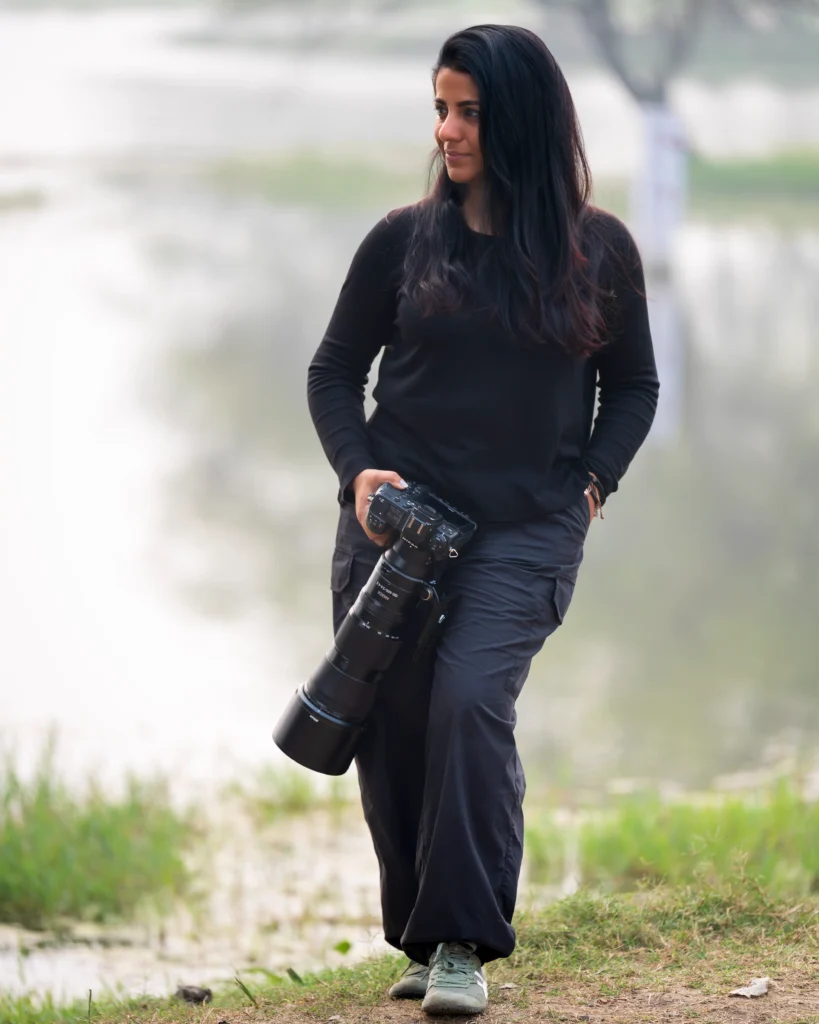
In an era where storytelling often leans towards spectacle, Priyansha Singh brings something quieter yet far more enduring to the frame, a rare blend of scientific insight and emotional intelligence shaped by years of observing life at its most intricate. Her journey does not follow the conventional arc of reinvention. Instead, it unfolds as a seamless evolution, where a foundation in genetics deepens rather than departs from her work behind the lens. Science taught her to observe patiently and to respect complexity. Photography, in her hands, becomes a continuation of that discipline, offering not just images but meaning. It is less about capturing the wild and more about understanding it.
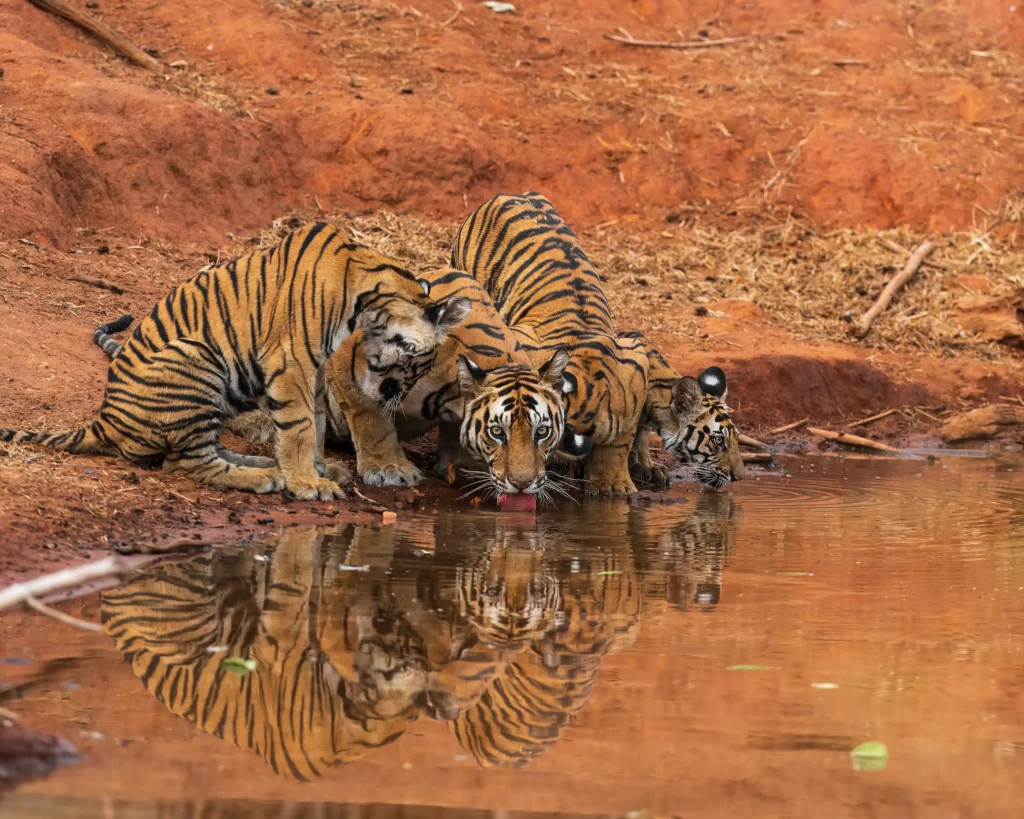
There is a strong sense of responsibility that underpins her work, particularly in shaping how Indian wildlife is perceived. Too often, the narrative is flattened into spectacle, especially when it comes to tigers. Priyansha resists this simplification. Her images and stories aim to restore balance, presenting animals within the context of their environment and the realities they face. Conservation, for her, is not an abstract ideal but something tangible. Alongside a guest, she contributed to installing solar powered panels at two water points in Bandhavgarh, Nigaha Nala and Van Talaiya, as well as a water pipe at another location. Today, tigers are thriving in these areas, a quiet but powerful reminder that meaningful change often begins with small, thoughtful interventions.
Her connection with tigers is deeply personal. The first sighting, she recalls, alters something fundamental within you. What begins as fascination gradually transforms into a deeper engagement with behaviour, personality, and narrative. The pursuit is no longer the perfect shot but the honest one, the image that carries a story rather than simply aesthetic appeal.
Among the many landscapes she has explored, Panna Tiger Reserve holds a distinct place in her journey. It is not just its ecological significance as a story of revival that draws her back, but something more intangible. She describes it as having a soul. It is a place that allows for connection rather than mere observation, where she has followed tigresses and their litters over the years, witnessing lives unfold in ways that are both intimate and unfiltered.
Wildlife photography, she admits, reshapes you in unexpected ways. It demands patience and strips away any illusion of control. The jungle dictates the terms, not the photographer. In that surrender, there is a lesson in stillness, in valuing presence over outcome. Silence becomes something to respect rather than fill.
In a world driven by visibility, she recognises the power of storytelling in conservation. Images can influence perception, and perception can inspire action. Yet she is careful to emphasise the need for responsibility. Sensationalism may attract attention, but it rarely fosters understanding. For Priyansha, the goal is connection that leads to care, not curiosity that fades.
There is also a realism to her perspective that cuts through the romanticism often associated with wildlife photography. It is far from glamorous. It involves long hours, unpredictable conditions, and often the absence of sightings altogether. The most compelling images are not defined by proximity but by behaviour, light, and context. Respecting distance remains paramount, even at the cost of a missed opportunity.
As a woman in the field, she has navigated her share of challenges, from logistical hurdles to moments of being underestimated. Yet these experiences have shaped her resilience and independence. In the wilderness, she notes, there is no distinction. The jungle does not differentiate. It demands strength and offers lessons equally.
One encounter in Bandhavgarh continues to influence her understanding of the wild. She watched a tigress accept a sub adult into her family while raising her own four daughters. The sub adult was the offspring of another female and the same male who fathered her current litter. It was an extraordinary moment of acceptance that challenged long held assumptions about tigers as strictly solitary animals. For Priyansha, it was a reminder that nature is not fixed. It evolves, adapts, and often defies the boundaries we impose upon it.
Indian wildlife photography, she believes, is gaining ground on the global stage, though there is still progress to be made. The country holds immense biodiversity and storytelling potential, yet it requires stronger platforms and narratives that move beyond surface level beauty.
At the heart of her work lies a simple yet profound intention. She wants people to feel something real. To pause. To look again. To understand the wild not as something distant, but as something deeply connected to our own existence. Through her lens, the wilderness is not just seen. It is experienced, respected, and, perhaps most importantly, understood.