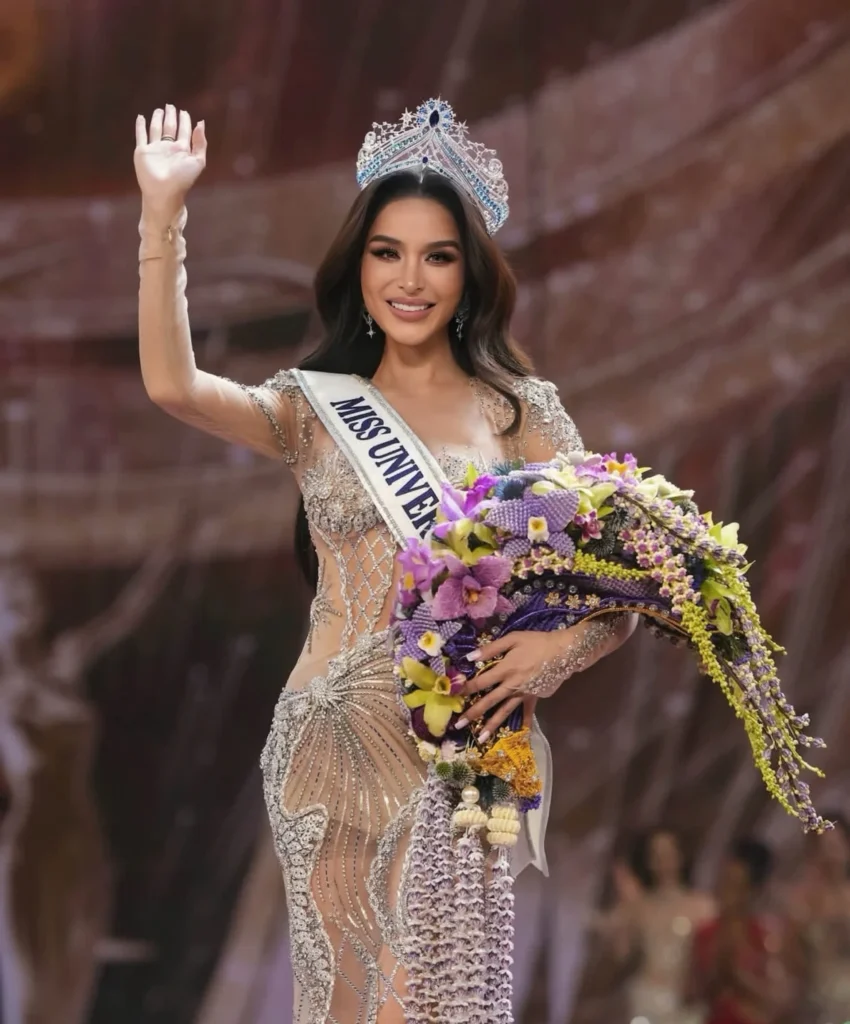
There are crowns that mark an ending, and there are crowns that reveal a beginning. For Tharina Botes, Miss Universe Thailand 2026 is unmistakably the latter. When she stood on the stage in Bangkok and heard her name announced as the winner, the moment represented far more than a long-awaited victory in beauty pageantry. It was the culmination of a journey that began when she was a young girl, a journey shaped by ambition, rejection, reinvention, discipline and the quiet decision to keep believing in something even when there was no guarantee that it would ever happen.
Born and raised in South Africa to a Thai mother and South African father, Botes grew up between cultures, absorbing the values of both while developing a deep connection to Thailand. At 22, she made the decision to move to Thailand independently and begin a new chapter of her life. That decision would eventually become part of a much larger transformation. Today, she is not only Thailand’s newest representative to Miss Universe, but also an entrepreneur, advocate and founder whose work extends beyond the pageant world. She owns Volare, an Italian restaurant in Bangkok, and founded The Ultimate Girl Guide, a platform designed to help women develop confidence, communication skills, personal identity and a stronger sense of their own potential.
Yet perhaps the most revealing part of her story is that she does not describe the crown as the destination. For Botes, the crown is a responsibility. It provides visibility, but visibility without purpose is ultimately only spectacle. What matters is what a woman chooses to do with the attention she receives.
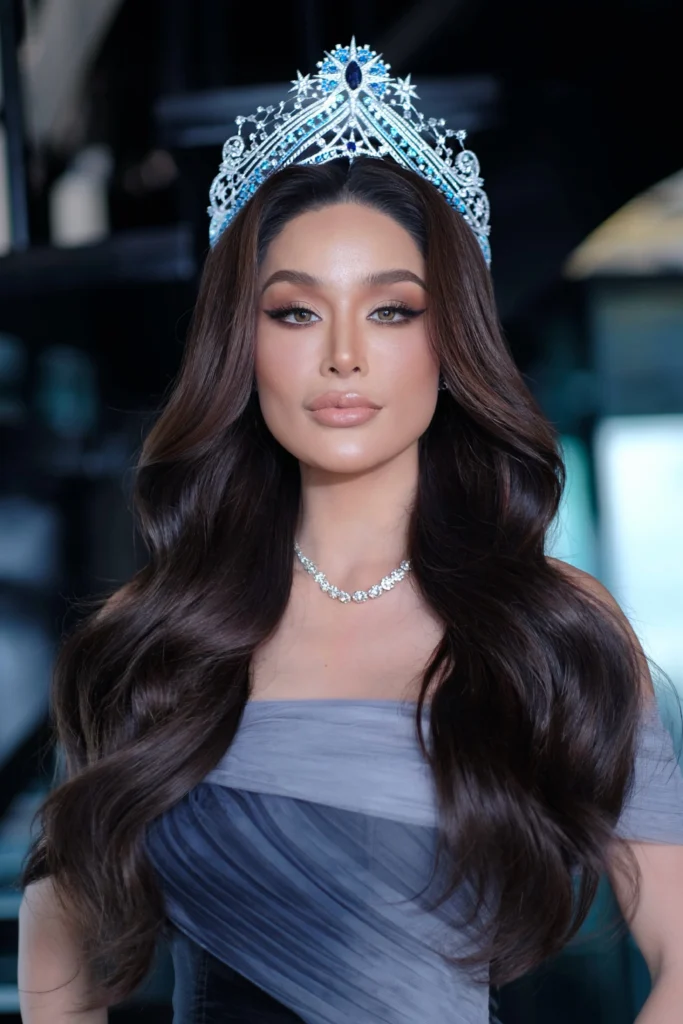
That philosophy has been years in the making. Botes entered the world of pageantry as a child, and the glamour of the stage initially held the natural fascination of a young girl. The gowns, the lights, the choreography, the anticipation of walking in front of an audience and feeling the energy of a room all became part of the dream. But growing older changed her understanding of what that dream could represent. The crown became less about being chosen and more about being entrusted.
Her journey has included the kind of setbacks that rarely appear in the final photographs of a beauty queen. There were disappointments, comparisons, rejection and moments when giving everything did not produce the result she wanted. She competed in South Africa before continuing her pageant career in Thailand, reaching the Top 12 of Miss South Africa 2018, later competing in Miss Grand Thailand, finishing as first runner-up at Miss Universe Thailand 2021, winning Miss Thailand World in 2023 and representing Thailand internationally. After more than a decade of competition, she finally returned to the Miss Universe Thailand stage and secured the national crown in 2026.
That history gives her victory a different emotional weight. The woman who finally won was not the same woman who first dreamed of competing. She had accumulated experience, learned how to absorb disappointment and, perhaps most importantly, discovered that failure could exist without becoming an identity.
Botes speaks about resilience without romanticising it. Strength, in her understanding, does not mean never breaking. It means allowing yourself to acknowledge disappointment and still choosing to continue. There is a maturity in that perspective that extends far beyond pageantry. In a culture increasingly obsessed with instant success, overnight visibility and the appearance of having everything figured out, her story makes room for another possibility: that taking longer does not mean losing.

Sometimes the years that appear to be delays are actually preparation.
That belief has also changed the way Botes thinks about perfection. For much of her life, she felt pressure to be confident, polished, successful and certain. But her journey taught her that perfection was never really the point. Transformation was. The question gradually shifted from whether she was good enough to something far more useful: who was she becoming?
That change in perspective may be one of the most significant transformations behind the crown. She did not need to become an entirely different woman to deserve her dream. She needed to release the fear, self-doubt and constant need for perfection that had prevented her from fully recognising the woman she already was.
It is this understanding of identity that informs her definition of modern beauty. For Botes, beauty has moved beyond appearance. It is found in confidence without arrogance, kindness when nobody is watching, resilience after rejection and the courage to live without constantly seeking permission to belong. A modern beauty queen, she believes, needs character before charisma. She must be intelligent enough to have an opinion, compassionate enough to understand other people, courageous enough to stand for something and humble enough to continue learning.
The distinction is important because the role of a beauty queen has changed dramatically. The contemporary titleholder is no longer simply a representative of physical beauty. She is increasingly expected to be a communicator, advocate, entrepreneur and cultural ambassador. Botes understands that evolution instinctively. Her own career already exists at the intersection of business, personal development, social impact and public representation.
For more than six years, she has also worked as an ambassador for Scholars of Sustenance Thailand, supporting initiatives focused on food rescue and food security. Her involvement has reinforced her belief that compassion only becomes meaningful when it is translated into action. The idea that something as ordinary as a meal can restore dignity, hope and opportunity has become part of the broader purpose she wants to carry with her.
This is also why Thailand represents something much more personal to her than a sash and a national title. She arrived in the country with her own history, but Thailand became the place where another version of her could emerge. Her relationship with the country is therefore not simply cultural representation. It is personal gratitude.
What she wants to represent internationally is not only the Thailand of temples, beaches, cuisine and traditions, but the Thailand she experienced through its people. For Botes, the country’s greatest quality is its warmth. There is a kindness and hospitality that she believes does not need translation, an instinctive ability to make people feel welcomed and included. Having herself experienced Thailand as a place where she could grow and build a new life, she wants to communicate that emotional dimension of the country to an international audience.
Her multicultural background gives that message an additional layer. She understands that national identity does not always exist as a single, uncomplicated story. Sometimes it is composed of several places, languages, histories and influences. Rather than seeing that complexity as something that needs to be resolved, Botes appears to see it as a strength.
Perhaps that is also why her ambitions for women extend beyond the traditional language of empowerment. Through The Ultimate Girl Guide, she wants to provide women with practical guidance around confidence, mindset, communication, personal branding and self-development. Her philosophy is that women do not always need someone to tell them who they should become. Sometimes they need someone to remind them that the person they are looking for is already within them.

It is an idea that mirrors her own journey.
The crown, in that sense, becomes less an object and more a platform. Her goal is not simply to be remembered as the woman who won Miss Universe Thailand in 2026, but as someone who used the visibility of that achievement to encourage other women to define success for themselves. She wants young women watching her story to understand that rejection does not necessarily mean unworthiness, that failure is not a permanent verdict and that taking a different route does not mean being lost.
Her message is particularly powerful because she is not presenting herself as someone who had an effortless journey. She is presenting the opposite. The woman standing beneath the crown is the product of every previous version of herself, including the ones that were rejected, disappointed, uncertain or afraid.
In November, Botes is scheduled to take Thailand’s story to the global Miss Universe stage in Puerto Rico. Yet whatever happens there, her international role has already become larger than a competition. She arrives carrying a country, but also carrying a personal philosophy about resilience, identity and the responsibility that comes with being seen.
And perhaps that is the most compelling thing about Tharina Botes. She does not want people to look at her crown and think they could never become the woman wearing it. She wants them to see the years behind it. The disappointments. The persistence. The moments when the answer was not yet. The decision to keep moving anyway.
Because the real story is not that a young girl dreamed of becoming a queen and eventually received a crown.
The real story is that she spent years becoming someone capable of carrying it.
And now, as she steps into the world beyond the national stage, Tharina Botes seems to understand something that every meaningful leader eventually discovers: the most powerful crown is not the one placed on your head. It is the confidence you place inside someone else when they are still learning to believe in themselves.