For Gina Choi, music has never been simply something she chose. In many ways, it feels as though music found her first, arriving before she fully understood what it meant to her. Singing became a place where emotions could exist without explanation, a language for feelings that words could not always hold. Even after years of change, distance, and growth, that instinct remains. Music is still where she feels most like herself, a space where emotion can become melody and memory can become something shared.
There is a quiet honesty in the way Gina speaks about her story. She describes herself as someone who is “writing the chapters I never got to tell,” a phrase that captures the heart of this new chapter in her artistic life. Rather than attempting to rewrite the past or create a polished version of who she once was, she is allowing herself to look more openly at the experiences that shaped her. Through songwriting, those experiences become something meaningful, something that belongs to her in her own words. There is no need for perfection. What matters is that the story feels true to the woman she is today.
That sense of truth is also at the centre of how Gina writes. Her songs often begin with an emotion, sometimes arriving unexpectedly in the quietest hours of the night. A melody may appear while she is half asleep, accompanied by a feeling she knows she needs to capture before it disappears. Her phone becomes a notebook of instinct, a place to preserve the first trace of something that might eventually become a song. The story comes later, when she begins to understand what that emotion was trying to tell her. For Gina, creativity is not always something to pursue. Sometimes it is simply something to notice.

Her songwriting begins from a deeply personal place, yet its purpose is never confined to her own experience. Love, loss, fear, hope and uncertainty may belong to different stories, but the emotions beneath them are universal. Gina does not begin by wondering whether everyone will understand what she has written. Instead, she follows the feeling honestly and trusts that something human will remain in it. When a listener responds with the simple words, “I’ve felt that too,” she is reminded of why sharing a story can matter. A personal truth can quietly become a shared one.
That connection is what she hopes listeners will carry with them when they hear her music. Gina is not searching for perfection in sound or presentation. She is drawn to the small imperfections that make music feel alive, believing that humanity often exists in the places where something is slightly unfinished. Her hope is beautifully simple: that her music might reach someone on a difficult day and make them feel a little more understood, a little less alone. She wants Gina Choi to evoke warmth, expression and sincerity, music that comes from a real place while leaving enough space for the listener to find themselves inside it.
Her understanding of that voice has changed considerably with time. Looking back, Gina remembers a younger version of herself who spent much of her life trying to become what she believed other people needed her to be. She did not always know how to speak for herself, and she does not judge that earlier version of who she was. Instead, she looks back with compassion, recognizing someone who was still learning and simply doing the best she could. There is tenderness in that perspective, and perhaps also freedom.
Stepping away and experiencing life beyond music gave Gina the space to grow into that freedom. Finding her voice again has therefore meant much more than returning to singing. It has meant learning to listen to herself, to trust her instincts, and to feel comfortable with the person behind the artist. The voice she is rediscovering is not necessarily the one she had before. It is one shaped by experience, reflection and a deeper understanding of herself.
That growth has also strengthened her relationship with individuality. In an industry constantly influenced by changing trends, Gina understands the temptation to follow what is current, but she no longer feels the need to disappear into it. Trends can inspire her, but they cannot define her. For Gina, an artist becomes memorable not by fitting perfectly into an existing image, but by bringing a perspective that could only belong to them. She wants to continue learning and evolving, while keeping her own point of view at the heart of everything she creates.
Performing has taught her another important lesson: vulnerability can become a form of connection. There is always a degree of fear in sharing something personal, especially when the audience is invited into a part of you that may normally remain private. Yet some of Gina’s most meaningful moments onstage have come when she stopped worrying about how she was being perceived and simply allowed herself to be present. In those moments, the distance between artist and audience begins to disappear. What remains is recognition, the quiet understanding that everyone carries emotions that may not always be visible.
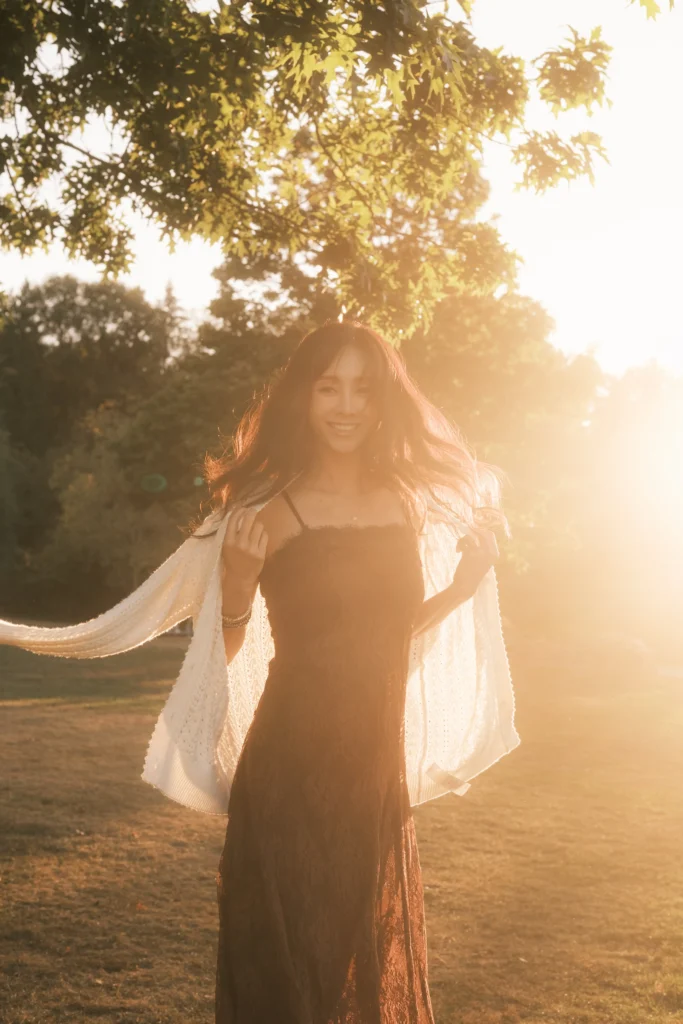
That same philosophy extends beyond music into the visual world surrounding her. Fashion, photography and imagery have become additional languages through which Gina can express who she is now. She is enjoying the process of discovering her style again, but she is not interested in returning to an image associated with an earlier version of herself. Instead, she is exploring what feels natural today: feminine, comfortable, thoughtful, playful and effortless, while remaining open to things she has never tried before. There is a new freedom in no longer feeling obligated to fit a single image.

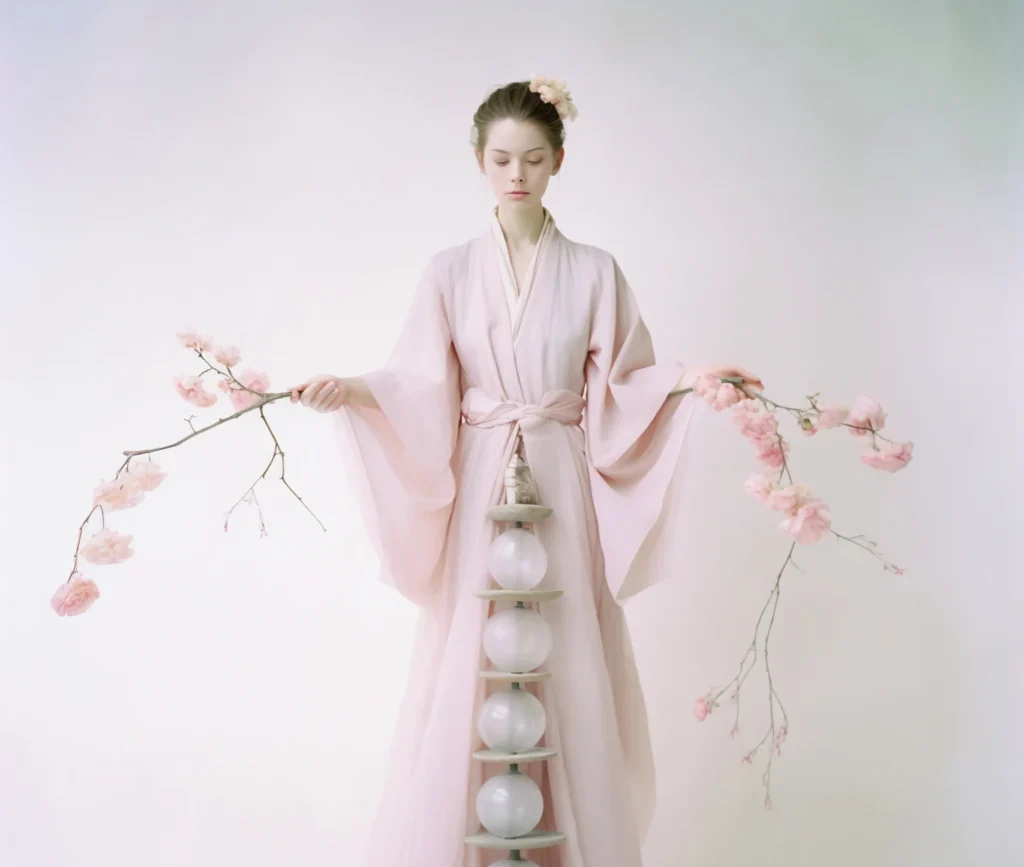
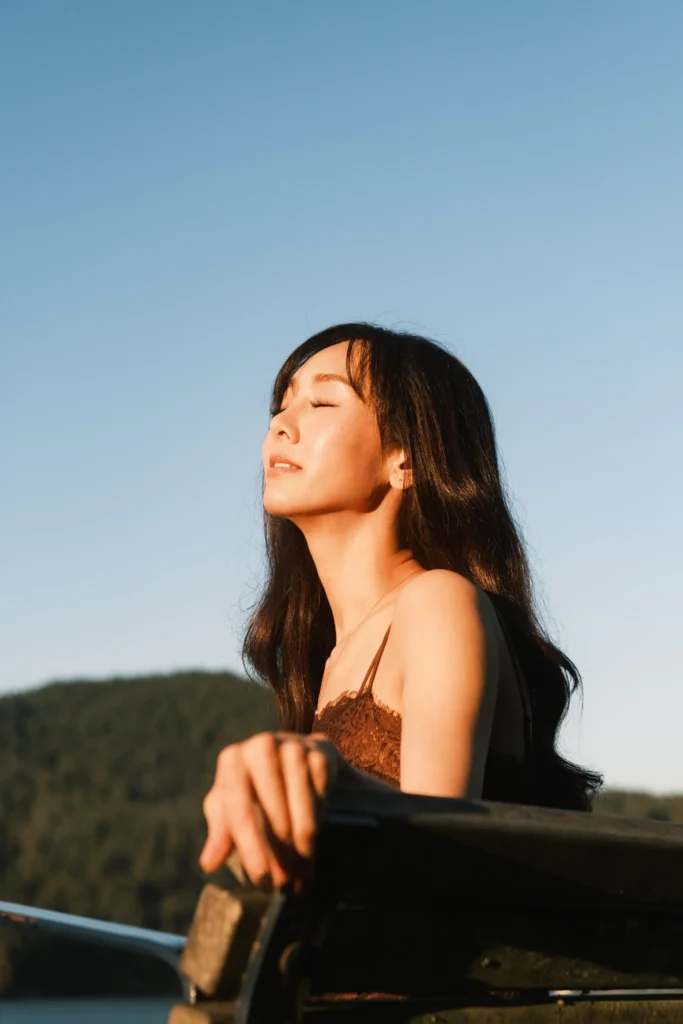
Her recent work with other creatives on a portrait series has reinforced that feeling. Gina wants her visuals to capture an atmosphere rather than simply achieve perfection. When music, fashion and imagery emerge from the same emotional place, they begin to create more than an aesthetic. They create a world, one that allows an audience to enter her story not only through sound, but through feeling, texture and visual language.
Now, that world is beginning to take shape inside her own home. Gina has been transforming her room into a small studio, creating a personal space where she can write, record and film whenever inspiration arrives. It is an intimate return to creativity, one that does not demand a grand declaration. She is sharing the process as it unfolds, including the beautiful moments, the uncertain ones and everything imperfect in between.
For Gina, this is not a comeback. The word itself suggests returning to something that ended, while she sees her journey differently. She is simply singing again, creating again, and allowing herself to experience the freedom of doing so in her own way. There is something quietly powerful in that distinction. She is no longer trying to recreate an earlier chapter. She is writing a new one, with the wisdom of everything she has lived through and the courage to let the story remain unfinished.

Perhaps that is what makes this new beginning feel so honest. Gina Choi is not trying to become someone else through music. She is becoming more fully herself through it. The songs, images and stories that emerge from this chapter will carry the marks of her past, but they will belong to the present. And this time, the pages are hers to fill, the melodies are hers to follow, and every chapter can finally be told in the voice that was waiting all along.