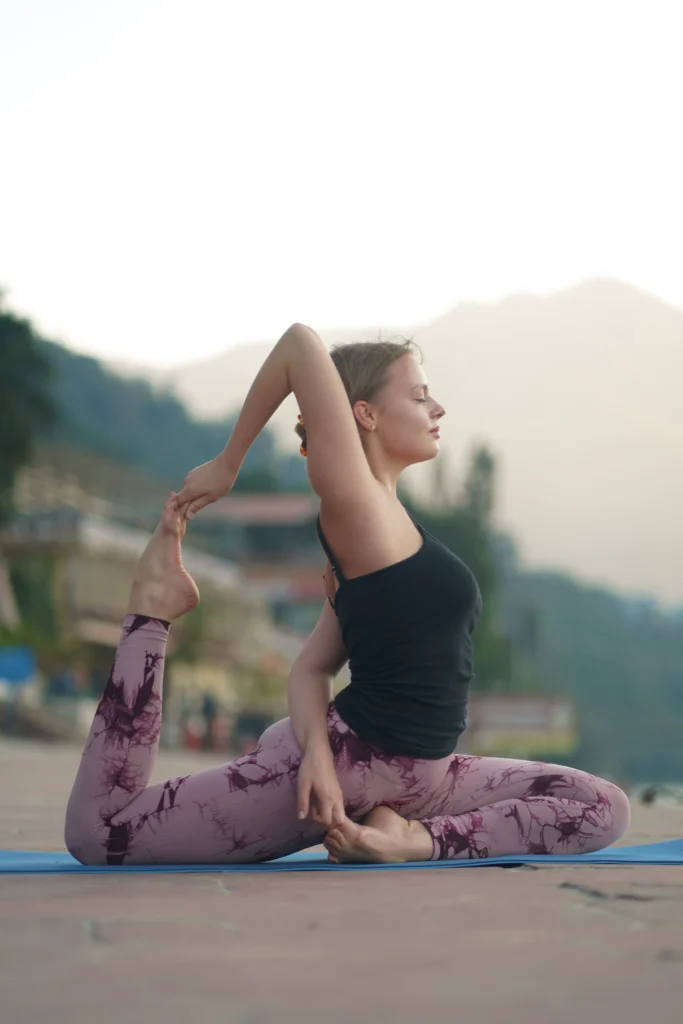
Some journeys begin with a destination, and there are journeys that begin with a question. For Maryia Dziahileva, the path that eventually carried her from Belarus to India, Europe and Dubai began with curiosity, but somewhere along the way it became something deeper. What began as a desire to experience India became an exploration of yoga, spirituality, traditional healing, human connection and, ultimately, a different understanding of what it means to live well.
Today, Maryia is a yoga practitioner and wellness advocate whose philosophy reaches far beyond the physical practice of movement. Her approach is rooted in the belief that wellbeing is not something to be achieved once and then maintained indefinitely. It is a living relationship between the body, the mind, the environment and the way we move through the world. Her journey across cultures has shaped that philosophy, giving her a perspective that is both deeply personal and increasingly relevant to a global audience searching for something more meaningful than the latest wellness trend.
Her connection with India began only two years ago, although the country had occupied a place in her imagination long before she arrived. She had wanted to visit for some time, but travelling there alone felt daunting. The turning point came unexpectedly at an Indian wedding in Poland, where she met people who would eventually create the bridge between her curiosity and the country itself. One of them later invited her to his wedding in India, giving Maryia the reason she needed to finally make the journey. India, however, offered her far more than a travel experience. From the beginning, she was struck by the country’s hospitality. It was an environment that felt simultaneously unfamiliar and strangely welcoming. During that first journey, she began exploring yoga and spirituality, attending classes and eventually meeting the yoga guru who would guide her further along her path. When she later travelled to Dubai, the experience of India remained with her. She found herself thinking about returning, not simply to see more of the country, but to study yoga properly and experience Rishikesh. Eventually, she returned, and this time India was no longer simply somewhere she was visiting. It became part of her personal and professional journey.
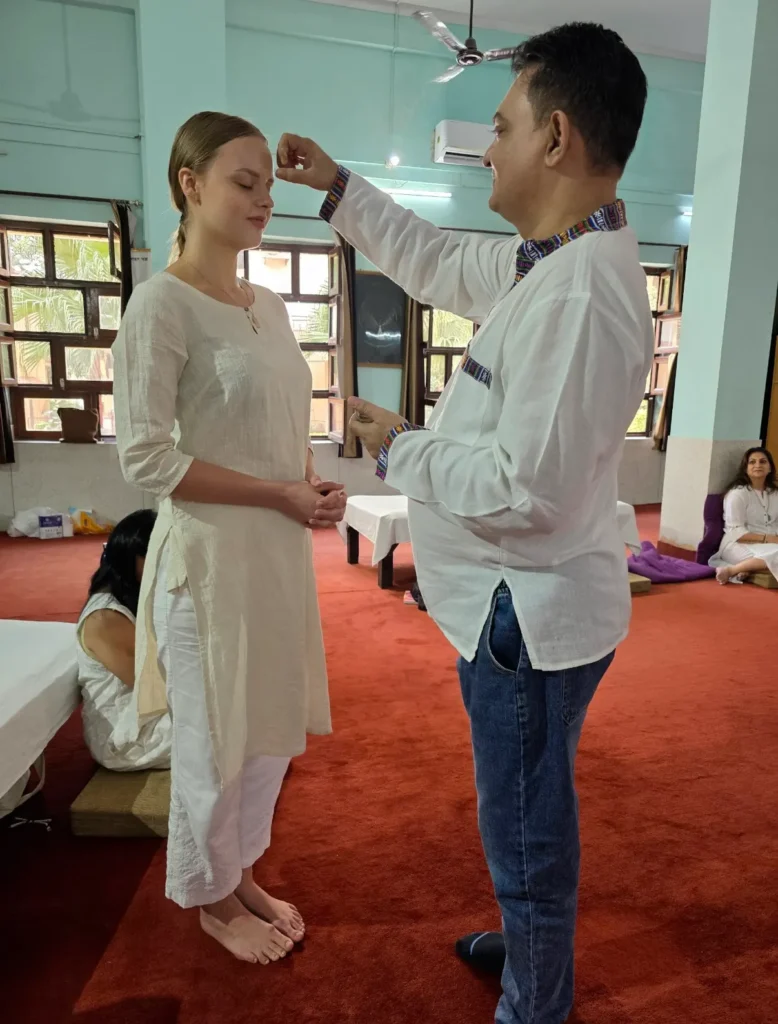
Her first encounter with the country was not entirely romantic. Landing in Delhi during a period of intense pollution, she became ill, her body encountering an environment it had never experienced before. Yet alongside the discomfort was an overwhelming sense of fascination. The traffic, the colours, the cows moving through the streets, the sounds, the people and their curiosity all felt extraordinary to someone experiencing India for the first time. She remembers wanting to capture everything on camera and share it with her family. It felt almost like watching a travel documentary while simultaneously being inside it. Interestingly, Delhi was initially the city she thought she would never return to. Life, however, has a habit of rewriting first impressions. After spending months there, developing friendships, discovering favourite places and creating memories, Delhi transformed from an overwhelming foreign city into somewhere close to her heart.
That transformation says something important about Maryia’s wider approach to life. She does not seem to view cultural difference as something that must immediately be understood. Instead, she allows herself to experience it, observe it and gradually develop a relationship with it. India became particularly transformative through yoga. For Maryia, the practice could not remain confined to the physical movements performed on a mat. Her time in India became a deeper exploration of traditional systems of wisdom, including yoga, Ayurveda, meditation and holistic healing. Knowledge she had encountered previously began to connect in ways that were more difficult to understand from a distance. Being in India allowed her to experience these traditions within the cultural environment from which they emerged.
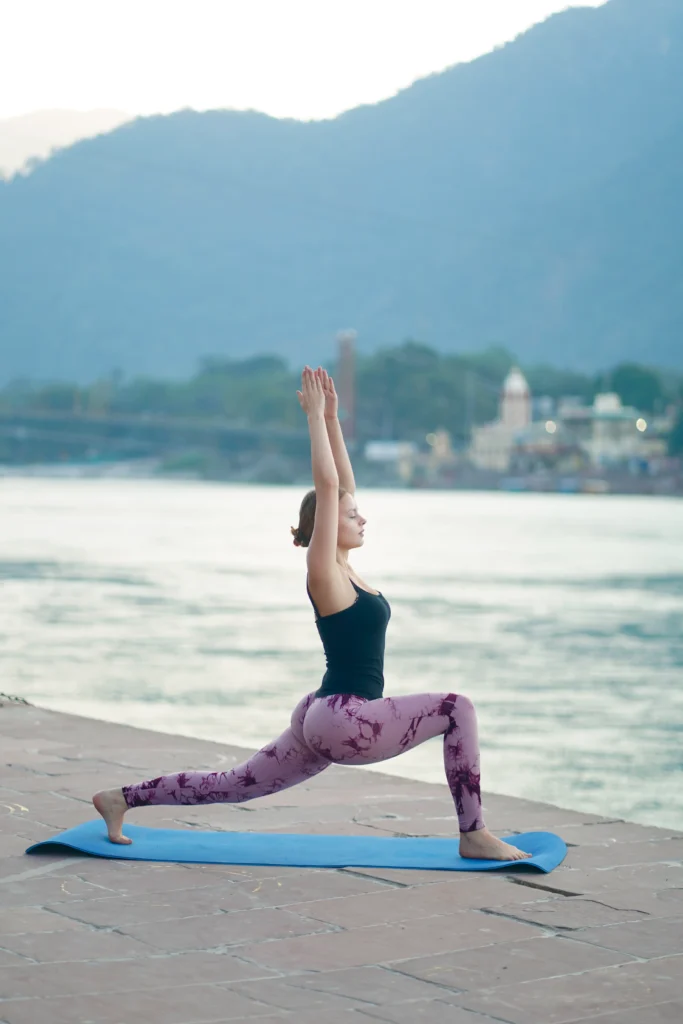
She studied different approaches to yoga and meditation while also gaining certifications in cupping therapy, Sujok therapy and acupressure. Rather than seeing these practices as isolated techniques, she began to understand them as parts of a much larger picture of wellbeing. That realisation became particularly powerful in Rishikesh. Situated in the foothills of the Himalayas along the Ganga, Rishikesh has long been associated with yoga, meditation and spiritual practice. For Maryia, the city offered an atmosphere that encouraged introspection. The mountains, the river, the ashrams and the sound of mantras created an environment where slowing down seemed almost inevitable. Perhaps surprisingly, it was also simplicity that taught her the most. Living in modest conditions with one suitcase, a small ashram room and, at times, no hot water, she discovered that happiness did not require the abundance she had once associated with comfort. The experience offered a lesson that sits at the heart of her philosophy today: wellbeing is not necessarily created by having more. Sometimes it comes from recognising how little we actually need.
That understanding has become particularly meaningful in a global wellness industry increasingly surrounded by luxury, technology, beauty and constant consumption. Maryia’s approach points somewhere else. She believes wellness begins with awareness, with listening to the body, listening to the mind and understanding that needs change and that wellbeing is not a fixed destination. What supports a person today may not be what they need tomorrow. Her philosophy sounds simple, but it represents a significant departure from the culture of instant transformation that often surrounds modern wellness. Social media can make health appear highly polished and perfectly organised, with carefully curated routines, aesthetic fitness spaces and promises of rapid results. Maryia believes the more sustainable approach is much more personal.
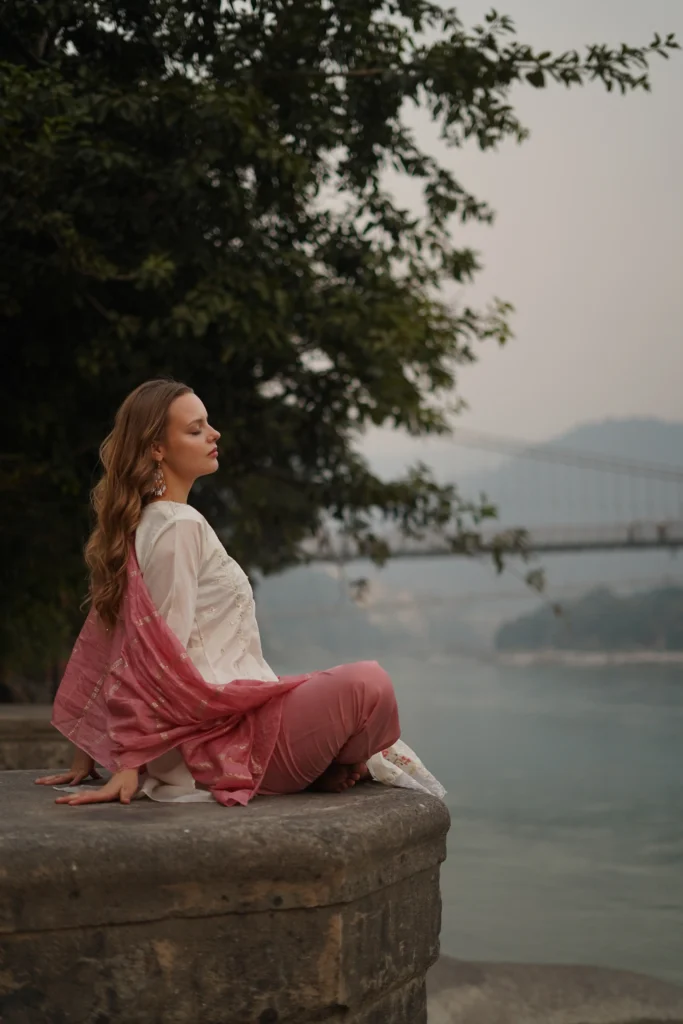
Her own routine reflects that flexibility. Physical movement is part of her everyday life, but she does not believe it needs to take one particular form. Yoga, running, gym sessions, dancing and stretching can all have a place. What matters is maintaining a relationship with movement that supports physical, mental and energetic wellbeing rather than turning exercise into another source of pressure. Learning is another important part of her lifestyle. She tries to read every day or continue studying through online courses, allowing intellectual growth to exist alongside physical wellbeing. Gratitude and journaling also form part of her routine, although she is equally conscious of not turning wellness into a rigid checklist. When travelling or when she simply does not feel like tracking every detail, she allows herself to stop measuring and experience the moment.
Even something as simple as hydration became an intentional practice for Maryia. She recognises that her body does not naturally signal thirst strongly, so she has consciously developed the habit of drinking at least 1.4 litres of water a day. The change, she says, has already become visible in her skin. It is a small example of a much larger principle: wellbeing is often built through ordinary decisions repeated consistently rather than dramatic transformations.
Her philosophy is also deeply connected to the idea of belonging. One of the principles closest to her is Vasudhaiva Kutumbakam, the ancient Sanskrit concept that the world is one family. For someone whose own life crosses cultures and continents, the idea carries particular resonance. Maryia’s experience has shown her that beneath differences of nationality, language, religion and upbringing, people share remarkably similar emotional experiences. People struggle, people hope, and people seek love, safety, belonging and meaning. She believes that when people choose to act from love, offering kindness, respect and care, they contribute to something much larger than an individual interaction. For her, the idea of humanity as one family is not simply a spiritual expression but a way of looking at everyday relationships.
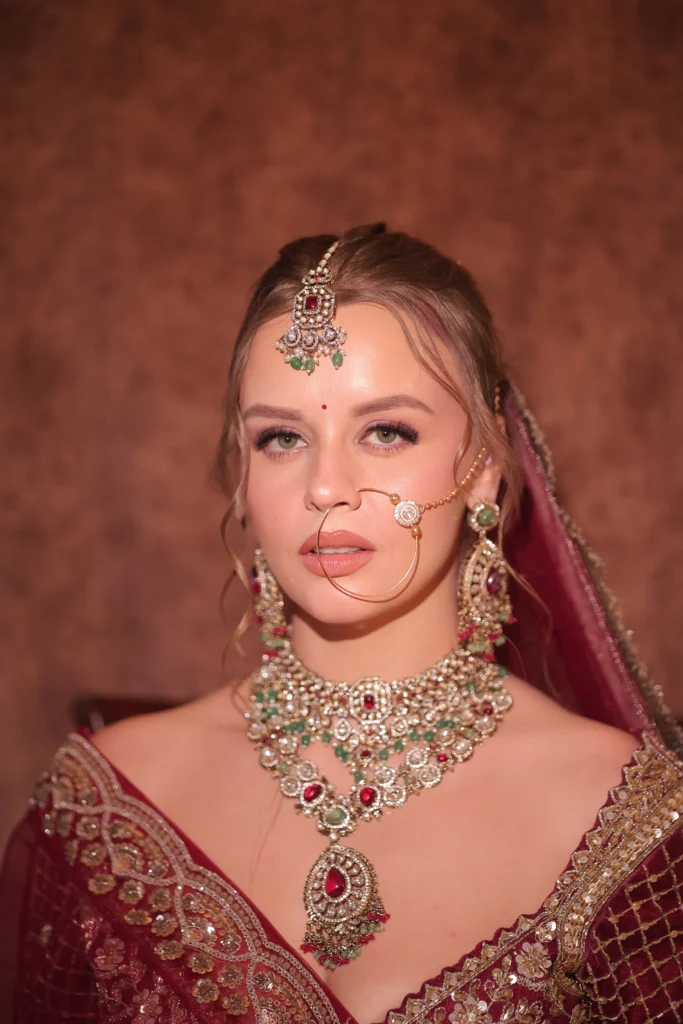
Her Belarusian upbringing has also remained an important part of that perspective. Maryia grew up in a rural area surrounded by nature, fields and open skies, and that connection with the natural world remains a powerful source of energy for her. She describes the warmth, kindness and hospitality associated with her upbringing as qualities that continue to influence the way she connects with people and ultimately the way she teaches. In her yoga classes, she wants students to feel seen, cared for and supported. For her, the reward is often something very simple: seeing someone leave the room in a better mood than when they arrived, feeling lighter, more grounded and improved in both their physical and mental state.
That philosophy gives her approach a distinctly human quality. In a wellness culture increasingly fascinated by optimisation, longevity and performance, Maryia places emotional experience back at the centre. Health is not only about how long we live or how our bodies appear. It is also about how we feel while we are living. This is where her vision for the future of wellness becomes particularly interesting. She believes the industry is gradually moving away from quick fixes, aesthetics and performative health towards something more individual and meaningful. The next evolution of wellness, in her view, will be less concerned with external validation and more focused on internal alignment. Instead of asking whether someone looks healthy, the more important question becomes whether they feel healthy. Instead of following a universal routine because it is fashionable, people may increasingly learn to understand their own bodies and minds. And instead of searching constantly for answers outside themselves, Maryia hopes people will rediscover the knowledge that already exists within them.
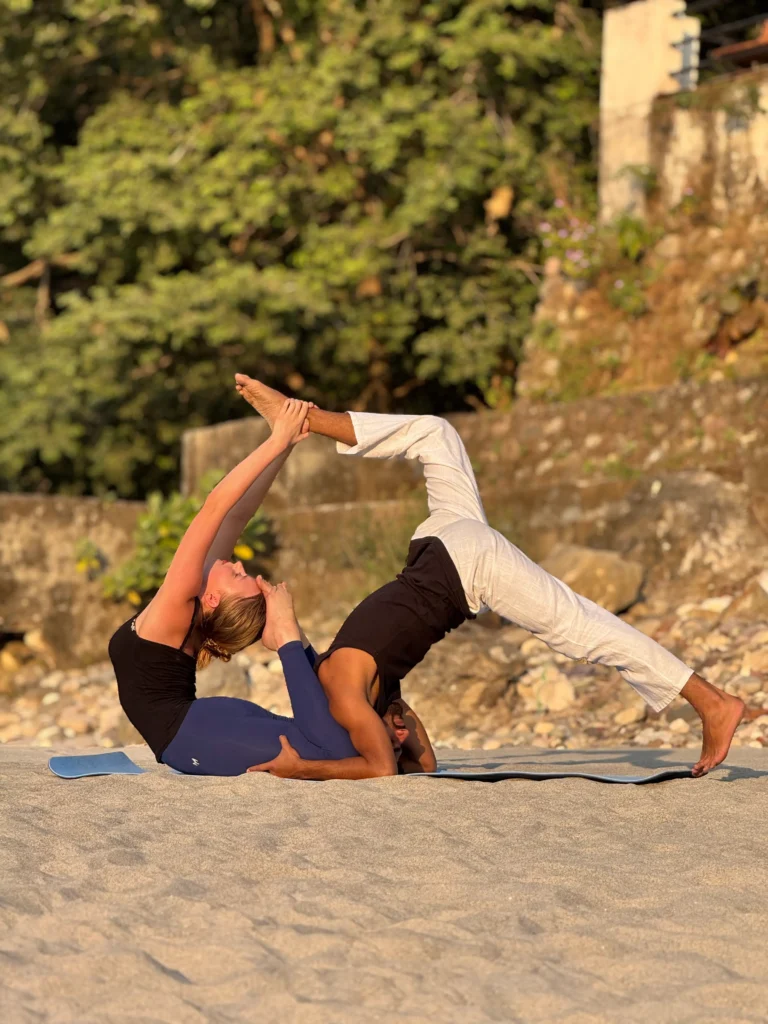
Her role, as she describes it, is to remind people of exactly that. There is an interesting connection between her international journey and this philosophy. Moving between Belarusian roots, European life, India and Dubai has exposed her to different ways of understanding community, spirituality, lifestyle and success. Yet rather than making her identity more fragmented, those experiences appear to have made her more comfortable with the idea that belonging does not have to exist in only one place. India gave her a deeper relationship with yoga. Belarus gave her an enduring connection to nature and hospitality. Europe formed part of her early life and international perspective, while Dubai represents another chapter in a constantly evolving global journey. Together, these experiences have created something that cannot easily be assigned to one country. Maryia’s worldview is inherently international.
That may be why her message feels increasingly relevant to the Asia Pacific region and to the wider global wellness conversation. The modern wellness seeker is no longer necessarily looking for a single tradition or one prescribed path. People are exploring yoga, meditation, traditional healing, movement, nutrition, nature and mindfulness across cultural boundaries. The challenge is to do so respectfully and meaningfully, rather than turning ancient traditions into fashionable commodities. Maryia’s own experience in India appears to have deepened her appreciation for that distinction. Her journey was not simply about learning yoga poses. It was about spending time within a culture, studying its traditions and allowing the experience to challenge her assumptions about comfort, happiness and identity.
There is a quiet beauty in that kind of transformation. She travelled to India because she wanted to see the country, but she returned because she wanted to understand something within herself. Somewhere between the mountains of Rishikesh, the energy of Delhi, the simplicity of an ashram and the different worlds she has encountered across continents, her definition of wellness began to change. Today, Maryia Dziahileva represents a version of wellness that feels less performative and more human. Her philosophy does not ask people to become perfect. It asks them to become aware, to listen to themselves, to remain curious and to recognise that wellbeing is something that evolves with them.
Perhaps that is the most meaningful lesson Maryia has carried from one culture to another. The world may be divided by borders, languages and traditions, but the human experience is remarkably universal. We may live in different places and carry different histories, yet our fundamental needs remain remarkably similar. We want to feel safe, loved, understood and connected. We want our lives to have meaning. We want to feel at home within ourselves.
For Maryia, the concept of Vasudhaiva Kutumbakam therefore becomes more than a philosophical idea. It becomes a way of living. Her journey from Belarus to India and across Europe and Dubai has shown her that identity does not necessarily become weaker when it crosses borders. It can become richer. Each culture can offer another perspective, each experience another lesson and each encounter another opportunity to understand the shared humanity beneath our differences.
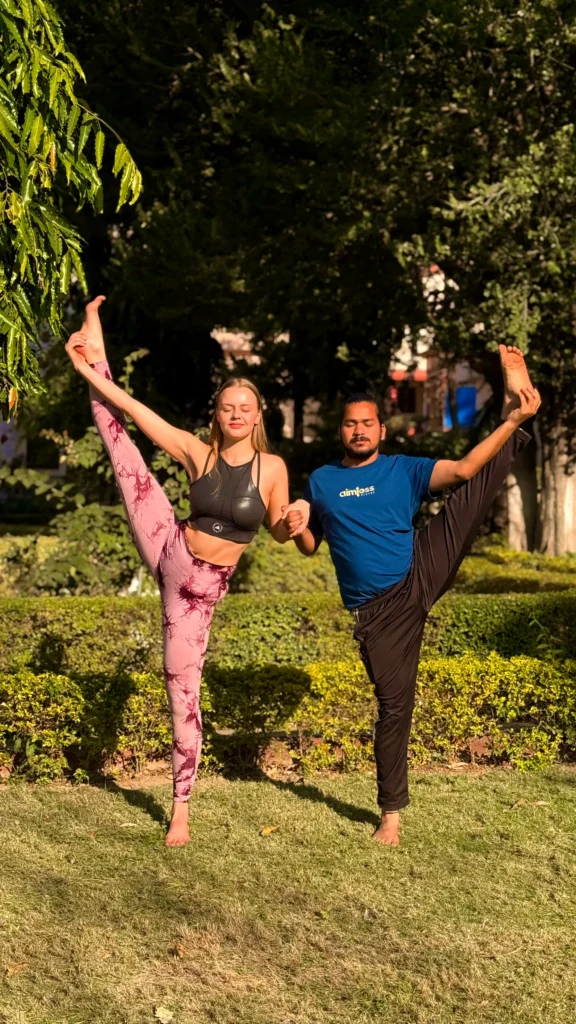
In many ways, her story reflects the changing face of wellness itself. It is becoming less about appearance and more about awareness, less about perfection and more about balance, less about following someone else’s formula and more about developing a personal understanding of what allows us to thrive. As wellness continues to evolve across Asia Pacific and around the world, voices such as Maryia’s offer a reminder that the most meaningful transformation rarely happens overnight. It happens quietly, through the choices we make every day and through our willingness to listen to ourselves.
Maryia Dziahileva’s journey began with a trip she had once been hesitant to make. It continued through yoga studios, ashrams, meditation practices, new friendships, different cultures and moments of profound simplicity. What she discovered along the way was not simply a profession or a wellness philosophy, but a different relationship with life itself. She learned that comfort can exist in simplicity, that belonging can cross borders and that wellness is not a destination waiting somewhere in the future. It is something we practise in the present.
Perhaps this is what makes her story resonate beyond yoga. Her journey is ultimately about connection: connection to the body, connection to the mind, connection to nature, connection to culture and connection to other people. In an increasingly fragmented world, her belief that humanity is one family feels both timeless and remarkably contemporary. Maryia Dziahileva is not simply teaching people how to move better or live longer. She is encouraging them to live with greater awareness, compassion and authenticity, and to remember that the most important answers may not always be found somewhere else. Sometimes, the journey across the world simply brings us back to ourselves.