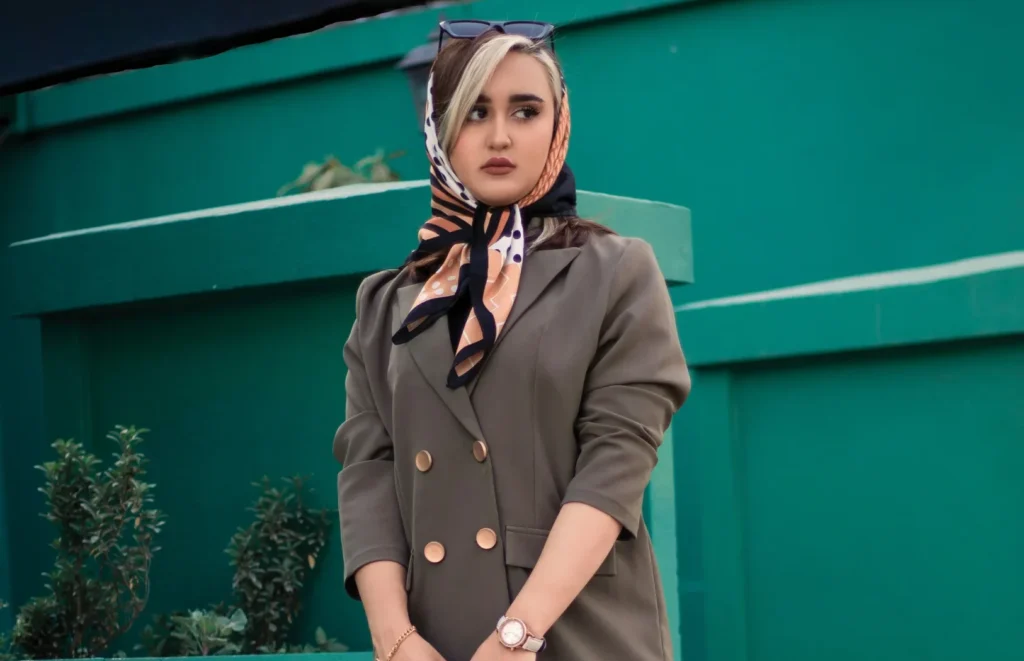

There are athletes who discover sport, and there are athletes who seem to grow inside it. For Aigerim, the distinction is important. She began judo at just five years old and entered competition at eight, so there was never a single dramatic moment when she decided that sport would become her profession. It was simply the environment in which she grew up, becoming more deeply woven into her identity with every passing year. What began as childhood training eventually became a life defined by discipline, international competition, and an endless desire to discover what she was capable of.
Her relationship with sport changed as she began representing Kazakhstan internationally. Competing for her country introduced a different kind of responsibility, one that extended beyond personal ambition. National championships, international competitions, and eventually the transition into grappling brought new challenges and new levels of expectation. Yet even after significant victories, Aigerim never experienced the feeling that she had arrived at a final destination. There was always another opponent, another technique, another level of understanding still waiting to be reached.
That philosophy became particularly meaningful during her journey to the Grappling World Championship. Preparing for the tournament was not a matter of a few intense weeks. She spent almost an entire year building towards it, competing in five tournaments along the way, including the Asian Championship in Bishkek and an international Brazilian Jiu Jitsu tournament in Abu Dhabi. The purpose was not simply to become physically ready, but to arrive with the competitive experience and mental confidence required for the biggest stage.

Then, shortly before the championship, an injury to her leg introduced another layer of uncertainty. For an athlete, an injury can occupy the mind almost as much as the body, but once Aigerim stepped onto the mat, there was no room to remain focused on what might happen. She had three matches ahead of her. She won all three, with the final ending 6 to 0.
The significance of that final only truly reached her afterwards. During competition, there is little space to think about what a victory might mean. There is only the next opponent, the next movement, the next decision. It was after the final that the reality became clear. She had become a world champion, and not simply any world champion. She had become the first grappling world champion from Kazakhstan, creating a moment that would remain among the most important of her sporting life.
Yet the foundation of that achievement was built long before grappling entered the picture. Judo remains the basis of her athletic identity. Years of training taught her how to understand balance, recognise the right moment to attack, make decisions quickly, and develop a discipline that eventually becomes instinctive. When a person begins training at five years old, certain movements and reactions become almost inseparable from the body itself.
But grappling also taught her the importance of starting again. She could not simply take everything she had learned through judo and expect it to translate perfectly. The ground game demanded new techniques, new habits, and an entirely different relationship with movement. Instead of relying solely on what she already knew, she had to become a student again. For an experienced athlete, that can be both humbling and liberating. Judo gave her the foundation, while grappling pushed her beyond the comfort of what was familiar.

International competition has continued to reinforce that lesson. No matter how thoroughly an athlete prepares, an opponent can always arrive with a style that changes the equation. Someone may move differently from anyone encountered in training, creating a situation where the original strategy is no longer enough. Aigerim has learned not to become too attached to a predetermined plan. If something is not working, she must recognise it quickly and adapt while the competition is still unfolding.
The mental aspect of that adaptation is equally important. At the highest levels of combat sport, an opponent is watching not only technique but reaction. Showing uncertainty, frustration, or hesitation can create another opening. Aigerim has learned that staying calm and thinking clearly under pressure can be just as important as physical ability. The competition may be measured in minutes, but those minutes demand years of preparation, awareness, and control.
What audiences see at a championship is only the visible fraction of the work. Behind those few minutes are months of technical training, sparring, strength and conditioning, recovery, nutrition, weight management, and constant analysis. Every mistake becomes something to examine. A lost position becomes a question. A failed technique becomes another lesson. The process continues long after the competition ends.

Perhaps the hardest discipline is also the least glamorous. It is the ability to follow the same routine day after day, including the days when motivation disappears. Aigerim understands that professional sport is not built only through extraordinary moments. It is built through ordinary days when nobody is watching, when the body is tired and the mind would rather rest, yet the work still has to be done.
One of the most transformative periods of her career came not through victory, but through injury. Returning to judo after a serious injury required more than physical recovery. She had to learn to trust her body again. Every movement could initially carry a question, a hesitation about whether something might happen again. But combat sport does not allow an athlete to remain permanently inside that fear. To compete fully, she needed to rebuild both strength and confidence.
Winning the Kazakhstan Championship after her return therefore meant something far beyond another title. It became proof that she had genuinely returned to herself as an athlete. The victory confirmed that the injury had not taken away the level she had worked so hard to build. It was a reminder that recovery is not simply about returning to the body you had before, but about rebuilding your relationship with it.
Even after becoming a world champion, her motivation has continued to evolve. The immediate emotion of a major victory eventually fades, and the athlete returns to the gym for another ordinary training session. A title changes expectations, but it does not remove the need to continue learning. In some ways, it creates a new responsibility. Opponents know more about you, standards become higher, and the level you expect from yourself becomes harder to satisfy.

Today, Aigerim is less interested in collecting medals simply for the sake of numbers. Her ambition has become more focused on becoming technically stronger, facing serious opponents, and testing herself against new levels of competition. What keeps her moving forward is curiosity. She still wants to learn, and as long as that feeling remains alive, she sees no reason to stop.
Her ambitions are also beginning to extend across borders. The United States represents an important professional environment for her, offering a strong combat sports culture, talented athletes, experienced coaches, and different approaches to training. For Aigerim, it is another opportunity to develop while bringing the knowledge accumulated through years of judo and grappling into a new environment. She wants to continue competing at a high level, work alongside strong professionals, and build the next stage of her career in combat sports.
There is also a future beyond competition that she can already imagine. After years of learning about technique, preparation, recovery, injury, and psychological pressure, she sees value in eventually passing that knowledge on to other athletes. Experience, for her, is not something to keep locked within a personal career. It becomes more meaningful when it can help someone else navigate the difficult parts of theirs.
Travel has been another education. Sport introduced Aigerim to the wider world from a young age, taking her across countries and placing her among people who grew up with completely different experiences. Today, she enjoys travelling for reasons beyond competition. Without the immediate pressure of weigh ins, training schedules, and the next match, a city can reveal itself differently. There is time to observe, explore, and simply exist within another culture.
Yet the habits of an athlete remain with her. She finds it difficult to stay in one place for too long and continues to feel drawn towards movement, new challenges, and people who are deeply passionate about what they do. Perhaps this is another reflection of the athlete within her. Stillness has its place, but growth often begins when something changes.
Behind every medal, however, Aigerim knows there is a story that cannot be captured by a photograph. A podium shows the result, but not the injuries, disappointments, exhaustion, recovery, repetition, or countless moments when an athlete has to begin again. The public sees the victory. The athlete remembers everything that happened before it.
For Aigerim, that hidden part of the journey may be more valuable than the titles themselves. Sport has been part of almost her entire life, beginning with a five year old girl stepping onto a judo mat and continuing through international championships and world level competition. She is proud of what she has achieved, but when asked what sport has given her that matters most, she does not point to a medal.
She points instead to the ability to continue.
A setback can hurt. A defeat can require time. An injury can force a person to rebuild from the beginning. But none of those things, in Aigerim’s philosophy, deserves to become a full stop. Eventually, you have to stand again and return to the work. That may be the most enduring lesson of her journey, not simply how to win, but how to begin again with greater knowledge, greater patience, and a deeper understanding of what it means to keep moving forward.
And perhaps that is what makes her story extend beyond sport. The world may remember the championship, the undefeated final, and the historic achievement for Kazakhstan. But behind those moments stands something quieter and more enduring, a woman who has spent almost her entire life learning that strength is not the absence of difficulty. It is the decision to return after it. As Aigerim continues to cross borders, enter new competitions, and build the next chapter of her career, that lesson remains her most powerful victory.